 Mario Ruoppolo (Massimo Troisi) is the gentlest of men, a lonely soul resigned to the monotony of life on a quiet Italian island. All that changes with the arrival of Pablo Neruda (Philippe Noiret), who suddenly becomes the island's resident celebrity. Exiled from his native Chile for political reasons, Neruda has a transforming effect on the ruggedly beautiful setting where "The Postman" ("Il Postino") takes place. He becomes an unlikely friend to Mario, who blossoms so beautifully under Neruda's influence that he discovers the idea of poetry as if it were new.
¶ As a rueful, warmly affecting film featuring a wonderful performance by Mr. Troisi, "The Postman" would be attention-getting even without the sadness that overshadows it. This Neapolitan actor, also a writer and director and much better known to Italian audiences than to viewers here, postponed a heart operation while he finished work on this pet project. He died (at the age of 41) the day after principal photography was completed.
¶ Succinctly dedicated "To Our Friend Massimo," "The Postman," which was directed by Michael Radford, is an eloquent but also wrenching tribute to Mr. Troisi's talents. The comic unease that he brought to this performance clearly has a component of real pain. But that hint of unease suits Mario's wide-eyed, wistful look and his slow, often dryly funny demeanor. When Mario is first hired to deliver Neruda's mail, he has so little else to do that he spends time breaking in his postman's hat so that it won't give him a headache.
¶ "That's a little trick of ours," he says knowingly to his father, a fisherman, who is one of the main reasons there has not been much poetry in Mario's life. They live together in bleak, drafty quarters, where Mario probably dreams of better things while his father slurps soup out of the pot.
¶ So the younger man is delighted to find a low-paying, not-too-promising job delivering mail to Neruda, who is the only local resident literate enough to be getting letters. Mario must bicycle to see Neruda at the remote hilltop outpost the writer shares with a woman, whom he treats grandly and addresses as "Amor."
¶ "He's a poet," Mario confides to his sole post office colleague once he overhears that. "That's how you can tell."
¶ At first, Mario's expeditions to see Neruda are cautious and polite, with Mr. Troisi engaged in amusing rehearsals for each brush with greatness. (Behind this handsome actor's hangdog expression and leisurely manner, there is slyly superb comic timing.) Then the postman begins to grow bold. He'd like a better autograph than the "Regards, Pablo Neruda" that his first request elicits. He'd like to know what makes Neruda tick. He might even like to be a poet himself.
¶ Naturally, this story is too good to be true. "The Postman" is based on a novel, "Burning Patience," by Antonio Skarmeta, in which the postman was a teen-age boy. Anyway, the postman is a fiction, and Neruda's real home during the early 1950's (when the story takes place) was on Capri, a less undiscovered place than this film's delightfully sleepy setting. But what's most clearly a fiction here is the effect that Mario's lovely naivete has on Neruda himself. Touched by the younger man's guilelessness, the writer is moved to show Mario that life on the island doesn't need the services of a visiting poet. It already has a poetry of its own.
¶ "The Postman" would be awfully cloying if it hammered home that notion too insistently. In fact the thought is expressed with gentle grace, and it is tempered by other, wittier effects of Neruda's presence. There's a sweetly romantic subplot about Mario's insistence that poetry have some practical application. He wants it to win him the beautiful Beatrice (Maria Grazia Cucinotta), who's not much of a reader but likes being compared to a butterfly.
¶ There's the hilarious way Beatrice's aunt is scandalized by such tactics, which she doesn't quite understand but does know are dangerous. And there's the sobering moment when Mario grasps what he must look like to a man of Neruda's celebrity. "I lived in complete solitude with the most simple people in the world," Neruda eventually tells a newspaper interviewer. Those simple people aren't entirely flattered by that description. Mario's reaction is more complicated, with a disillusionment that is also the measure of how profoundly Neruda has changed him.
¶ Mr. Noiret, the superb French actor who is such a sturdy presence, has so much of the right lumbering gravity for Neruda that his performance is hardly hurt by being dubbed into Italian. He accomplishes the major feat of making Neruda's side of this tale plausible, and gives his love of poetry real immediacy on screen.
¶ And Mr. Noiret is magnetic enough to account for the villagers' debate about the essence of Neruda's appeal. Mario and his postal superior spend a lot of time noticing how many female correspondents this outspoken Communist poet and politician seems to have. Mario thinks this must make Neruda "the poet loved by women," but his boss finds that embarrassing and staunchly corrects it. Neruda, he proclaims, is "the poet loved by the people."
¶ Still, neither he nor Mario nor anything else about "The Postman" can resist the romance of Neruda. And those letters from the ladies just won't quit. The boss is finally forced to modify his position. "Even the women are interested in politics in Chile," he concedes.
¶ THE POSTMAN (IL POSTINO) Directed by Michael Radford; written (in Italian, with English subtitles) by Anna Pavignano, Mr. Radford, Furio Scarpelli, Giacomo Scarpelli and Massimo Troisi, based on the novel "Burning Patience" by Antonio Skarmeta; director of photography, Franco Di Giacomo; edited by Roberto Perpignani; music by Luis Enrique Bacalov; production designer, Lorenzo Baraldi; produced by Mario and Vittorio Cecchi Gori and Gaetano Daniele; released by Miramax. Running time: 113 minutes. This film is not rated. WITH: Massimo Troisi (Mario), Philippe Noiret (Pablo Neruda), Maria Grazia Cucinotta (Beatrice), Linda Moretti (Rosa) and Renato Scarpa (Telegraph Operator). [source] check out this film at imdb
Showing posts with label Movie Review. Show all posts
Showing posts with label Movie Review. Show all posts
Jun 14, 2011
Il Postino (1994): The Postman
Jun 8, 2011
I Am an S+M Writer
Based on a novel by Dan Oniroku, probably best known for Flower and Snake, I am an S&M writer tells the story of Kurosaki and his much younger wife Shizuko. Kurosaki, Osugi Ren, at one point during his writer career wrote a type of literature termed junbungaku, pure literature, which distinguished itself from taishibungaku, popular literature.
In Japanese terms Oe Kenzaburo would fall into the realm of pure literature while Haruki Murakami, although he straddles both types of literature because of the various themes in his body of work, would fall into popular literature.
For a more Western view think of Thomas Pynchon being in the realm of pure literature while Stephen King falls into the realm of popular literature. Anyway, although Kurosaki set out at the early point of his career to write important works of pure literature the sells were dismal so he and his young wife led a less than ideal existence. However, a door apparently opened for Kurosaki to write erotic S&M fiction and soon he and his wife owned a large, beautiful home and seemed to have all the material comforts that life had to offer, however, was he and his wife truly happy?
I am an S&M writer opens with Kurosaki and his assistant working in his home study. However, the type of work that they are doing might strike some as quite odd. Apparently Kurosaki is a very visual person, because within the confines of his study his assistant Kawada, who is also a master at erotic rope binding, has tied up a bargirl named Kyoko in a less than flattering position. Observing how the bondage effects both Kyoko's emotions and body, Kurosaki dictates his story to Kawada. All seems to be going pretty well until Shizuko walks in through the door. There is no great fight, but that night Shizuko states that she will begin sleeping in another bedroom away from the "pervert." However, things soon escalate and Shizuko strikes up a relationship with a foreigner and soon afterwards asks Kawada to her up also.
Despite the English title of this film, the Japanese title is Futei no kisetsu or Season of Infidelity, the S&M aspect of the film does not go beyond rope bondage, instead the film delves more into the power of the imagination. When Kurosaki learns that his wife is being unfaithful, he instead feeds off of this infidelity to feed his creativity and he seems to become more attracted to the conception of his wife as an adulteress instead of her actual blood and flesh being. This theory is given strength when Kurosaki himself engages in an act of adultery with the bargirl while listening to a tape of his wife with Kawada.
While no means a great film, I am an S&M Writer is a short glimpse inside the filmic world of Hiroki Ryuichi who also directed such films as Tokyo Trash Baby and Vibrator.
---------
check more about this movie at http://www.imdb.com/title/tt0266568/
Mar 30, 2011
Sundays at Tiffany's Movie
 Synopsis: Alyssa Milano, who also serves as producer, stars as Jane Claremont, who, as a young girl, would accompany her mother Vivian (Stockard Channing) to Tiffany’s in New York every Sunday and bring along her imaginary friend, Michael. Now, 20 years later, Jane is a successful businesswoman, set to marry Hugh (Ivan Sergei), her handsome fiancé, until Michael (Eric Winter) suddenly reappears, all grown up, to warn Jane about the path her life is on. Initially shocked and in disbelief, Jane slowly realizes that not only has Michael returned to her when she needs him most, but he may also be her one true love. Based on the book by James Patterson.
CHARACTER:
Jane
Jane knows that marrying Hugh, a professional actor, means some small sacrifices. Yet she doesn’t really know what she’s missing out on until a mysterious man, Michael, appears in her life and his presence forces her to reevaluate her relationships. Jane questions whether Michael is really her childhood imaginary friend, but regardless, she feels an undeniable connection to him.
Alyssa Milano
Actress Alyssa Milano has spent almost her entire life in the public eye. A famous child actor, Milano has continued to work throughout her adulthood in both television and film. She starred on the hit WB series “Charmed” for nine years. The series’ debut was the highest-rated premiere in the network’s history. She also starred on the Fox series “Melrose Place.” She began her career on ABC’s “Who’s the Boss,” which aired for eight years.
Vivian
Vivian is a power player in the New York theater scene, and her career has always been her number one priority. When her playwright daughter, Jane, has plans to marry a rising star, Hugh, she sees it as a brilliant public relations move. When Michael inserts himself in Jane’s life, she’s not sure what to make of him — a man who claims he is her daughter’s imaginary friend.
Stockard Channing
Forever known for her role as Rizzo in the film “Grease,” Channing was born on Manhattan’s Upper East Side. In 2002, Channing won two Emmy Awards for her roles as First Lady Abbey Bartlet on NBC’s “The West Wing,” and for the role of Judy Shepard in “The Matthew Shepard Story,” for which she also received a Screen Actors Guild Award. She received a 2005 Daytime Emmy Award for her role in “Jack.“ Channing’s extensive theater credits include “Pal Joey,” “Joe Egg,” “Hapgood,” “Love Letters,” “Woman in Mind,” “The Breath of Life,” and many more.
Michael
Michael’s job is to befriend children who need extra love in their lives. The toughest part about being an imaginary friend is leaving when the child has built up enough confidence and character, and knowing that they can never meet again. When Michael crosses paths with grown-up Jane 20 years later, a situation that has never occurred before, he realizes that a magical twist of fate has brought them together for a reason.
Eric Winter
A charming and versatile actor, Winter can currently be seen in a recurring role opposite Simon Baker on the hit CBS series “The Mentalist.” Winter previously recurred on the critically acclaimed “Brothers & Sisters” as well as the cult vampire drama “Moonlight.” Early on he became a fan favorite in his television debut role on the popular daytime soap opera “Days of Our Lives.”
Hugh
Hugh is making a name for himself as an actor, and marrying Jane will complete his perfect image. There’s just one problem: Their relationship may be jeopardized when Jane’s old friend, Michael, comes back into her life.
Ivan Sergei
Ivan Sergei first made a name for himself in the indie gem “The Opposite of Sex,” with Christina Ricci. Additional movie credits include “The Big Day,” “Scorched,” “Dangerous Minds,” “We Met on the Vineyard,” “Playing Mona Lisa,” “Gunfighter’s Moon” and “The Break-Up,” with Jennifer Aniston and Vince Vaughn. Most recently, Sergei guest-starred on Lifetime’s hit television series “Army Wives.” He also starred in the Lifetime Original Movie “Nora Roberts’ High Noon.”
more about this movie visit http://www.mylifetime.com/movies/sundays-at-tiffanys
Mar 21, 2011
Bollywood/Hollywood (2002)
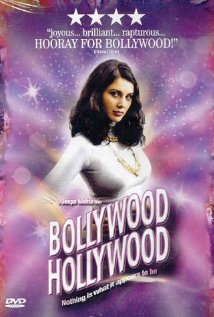 Director: Deepa Mehta
Writer: Deepa Mehta
Stars: Rahul Khanna, Moushumi Chatterjee and Dina Pathak
After Rahul's white pop-star fiancée dies in a bizarre levitation accident his mother insists he find another girl as soon as possible, preferably a Hindi one. As she backs this up by postponing his sister's wedding until he does so, he feels forced to act, the more so as he knows his sister is pregnant. But it's a pretty tall order for an Indian living in Ontario, so when he meets striking escort Sunita who can 'be whatever you want me to be' he hatches a scheme to pass her off as his new betrothed. Things get complicated when his family start to take to her and he realises his own feelings are becoming rather stronger than that. Written by Jeremy Perkins {J-26}
Ten years ago, teen-aged Indo-Canadian Rahul Seth swore on his father's deathbed to make family a priority and marry a nice South Asian girl so that he would lead the Seth family into continued respectability above all else. Now, a wealthy Rahul is still unmarried, and is unlikely to get married in his own estimation. He can't ever marry his one true love, Anglo pop star Kimberly Worthum, and feels no woman, let alone a South Asian one, can ever replace her in his heart. But Ruby, Rahul's drama queen of a mother, won't allow the wedding of Twinky - Rahul's sister - to go ahead until Rahul has found a South Asian bride. Knowing that will not happen, Rahul makes a very expensive and strictly business arrangement with a domineering woman named Sue to act as his future bride for Twinky's wedding. Rahul met Sue when she tried to pick him up in a bar. Rahul believes Sue works as an escort and is ethnically Spanish, but that she can legitimately pass as South Asian. As Rahul and Sue go through with the deception, aided by Rahul's faithful chauffeur Rocky who is hiding his own secret, Rahul learns that Sue's deception goes a little deeper in many different respects. What Rahul doesn't know is the baggage that Sue herself brings into the arrangement. Written by Huggo
Oct 4, 2010
The Social Network: Film about Facebook
 Could it be that the person who founded Facebook, the man who connected so many individuals that the total defies belief (500 million and counting), is himself incapable of close personal friendship? Is it possible that the world's youngest self-made billionaire, a 26-year-old whose creation unites people in 207 countries using 70 languages, is the loneliest guy on the planet?
If that sounds like a hell of a premise, you don't know the half of it. Smartly written by Aaron Sorkin, directed to within an inch of its life by David Fincher and anchored by a perfectly pitched performance by Jesse Eisenberg, "The Social Network" is a barn-burner of a tale that unfolds at a splendid clip.
Yet, while nothing is more au courant than the Facebook phenomenon, "Social Network" succeeds because its story is the stuff of archetypal movie drama. It marries the tradition of present-at-the-creation epics like "Dr. Ehrlich's Magic Bullet," "Madame Curie" and "Edison, the Man" with the familiar story of the corrupting power of ambition and success that allows audiences to feel, and not for the first time, that their ordinary lives have more meaning than those of the rich and famous.
Where "Social Network" departs from those earlier biopics is that, as played by Eisenberg, protagonist Mark Zuckerberg is introduced as extremely unlikable rather than heroic, a self-absorbed and arrogant 19-year-old Harvard sophomore who is as socially maladroit as he is fearsomely smart.
An actor who has nailed every discontented role he's had, including "Roger Dodger," "The Squid and the Whale" and "Adventureland," Eisenberg excels as someone whose success is fueled, in classic movie fashion, by resentments of all shapes and sizes. His Zuckerberg is so consumed by the drive to get even and gain status that no one is a match for the combination of ruthless focus and disinterested frigidity he brings to the table.
The opportunity to simultaneously portray and dissect this kind of compelling yet distant individual is an ideal fit for Fincher. Presented with an involving central character cold enough to suit his chilly but considerable filmmaking talents, the director does his best work, convincingly presenting a story about conflicts over intellectual property as if it were a fast-paced James Bond thriller.
"Social Network" is fluidly shot by Jeff Cronenweth with convincing production design by Donald Graham Burt, both Fincher regulars, and the director also has the benefit of working with Sorkin's strong and persuasive script. As fans of TV's "The West Wing" well remember, Sorkin writes great crackling dialogue that dramatically represents the dynamics of power relations, and he puts that gift to great use here. Both his writing and the unnerving music by Trent Reznor and Atticus Ross bring so much propulsive energy to the project that resistance is all but futile
Although the film is based on Ben Mezrich's "The Accidental Billionaires," Sorkin did his own research into the story and his treatment doesn't have an ounce of fat on it. Though there has been talk of "Social Network" having Rashomon elements, that is something of a red herring. The film's characters naturally have differing viewpoints and details are argued over, but the basic thrust of this tale never wavers, no matter whose eyes events are being told through.
"The Social Network" begins by positing that it was a very specific social resentment that got Zuckerberg started on his road to billions. The film opens at an undergraduate bar near the Harvard campus in the fall of 2003 with Zuckerberg getting dumped by his girlfriend Erica ( Rooney Mara, soon to be Lisbeth Salander in the Fincher-directed versions of the Stieg Larsson trilogy). Going out with him, she says tartly, is "like dating a Stairmaster."
Furious at this rejection, Zuckerberg stomps back to his dorm and, with the help of roommate and best friend Eduardo Saverin (the gifted shape-shifter Andrew Garfield), takes revenge by doing some adroit hacking and coming up with Facemash, a site that enables students to vote on which Harvard women are the hottest. It gets 22,000 hits in two hours and crashes the university's system.
That stunt attracts the attention of two of the school's elite, rowers and identical twins Cameron and Tyler Winklevoss (played, with the help of computer wizardry, by two unrelated actors, Armie Hammer and Josh Pence). They and friend Divya Narendra (Max Minghella) hire him to work on a university dating service they have in mind called Harvard Connection. Almost simultaneously, Zuckerberg, funded by best friend Saverin, starts "thefacebook," which eventually morphs into you know what.
After these dynamics are established, "Social Network" jumps us a few years into the future, to separate but equally acrimonious lawsuits brought against Zuckerman by the Winklevosses and by Saverin, all of whom, albeit for different reasons, are upset enough with their erstwhile colleague and friend to drag him into legal proceedings.
Part of "Social Network's" energy comes from the alacrity, courtesy of the brisk editing of Angus Wall and Kirk Baxter, with which it jumps between the taking of two sets of depositions and the film's depiction of the events that led to Facebook, and Zuckerberg, getting rich and famous. This includes the eventual involvement of Napster co-founder Sean Parker (a quite-convincing Justin Timberlake), a personality as seductive as he was divisive.
Another red herring about "Social Network" is how true to life these characterizations and this film are. It's a red herring because movies, even well-intentioned documentaries, distort reality by their very nature. Zuckerberg's adherents say the film is unfair to their man, and it may or may not be, but given that a New Yorker writer who interviewed him characterized the Facebook founder as "distant and disorienting, a strange mixture of shy and cocky," Eisenberg's characterization doesn't seem that far off the mark.
All that really matters about "Social Network" is that it be convincing in movie terms, and it very much is that. Very likely gritting his teeth and agreeing is Zuckerberg himself. Someone who donated $100 million to the Newark, N.J., public schools just as this film was opening the New York Film Festival is probably worried that with all his billions he may forever be a prisoner of the film's uncharitable portrayal, just as gifted actress Marion Davies was similarly blindsided by the talentless character based on her in "Citizen Kane." Facebook may be powerful, but impressive movies have a force that cannot be denied.
----------
kenneth.turan@latimes.com, at http://articles.latimes.com/keyword/entertainment
Sep 30, 2010
Wall Street: Money Never Sleeps
 Money Never Sleeps kicks off in 2001 with Gordon Gekko being released from jail after serving out his time for insider trading, racketeering and other nefarious activities. Standing alone outside of prison, Gordon's been forgotten by the world. Not even his daughter, Winnie (Carey Mulligan), is there to greet him. However, Gordon may be down but he's not out. He sets to work writing a book all about his get-rich-quick schemes.
Flash-forward to 2008 and Jake Moore (Shia LaBeouf) is a rising star at the investment firm run by Lou Zabel (Frank Langella). Lou's Jake's mentor and friend, but the 75 year old Lou appears to be losing his footing in the market. The market's about to go into free-fall, and Lou's company is not in any shape to survive the crisis. The Federal Reserve Bank steps in and, led by Lou's rival Bretton James (Josh Brolin), forces Zabel to sell off his company for pennies on the dollar. Losing his business and with his reputation ruined, Lou steps in front of a train and leaves others to clean up the mess.
Jobless, Jake takes in a lecture by Gekko, who's now a bestselling author and who also happens to be Jake's girlfriend's estranged father. After the lecture, Jake seeks out Gordon and after briefly sizing each other up, they make a mutually beneficial deal. Gordon wants to be back in his daughter's life and Jake wants to pick Gordon's brain about who could possibly be behind the collapse of Lou's company and ultimately responsible for forcing Lou into taking his own life. Jake wants revenge, Gordon wants back in the game, and neither is afraid of getting their hands dirty. Lying, cheating, back-stabbing and playing loose with other people's money - it's all in a day's work for these Wall Street types.
about the film
Wall Street: Money Never Sleeps was directed by Oliver Stone and is rated PG-13 for brief strong language and thematic elements.
Theatrical Release: September 24, 2010
Sep 28, 2010
Film Review: The Social Network
 A mesmerizing, bewildering and infuriating protagonist makes this movie about Facebook's creation a must-see.
"The Social Network" has as its protagonist a character drawn in a Shakespearean mode, a high-achieving individual who carries within him the seeds of his own destruction. This would, of course, be young Mark Zuckerberg (Jesse Eisenberg), the man behind the social-network phenomenon Facebook.
As the movie makes abundantly clear, the facts behind its founding are in dispute but, without a doubt, Zuckerberg did create Facebook. Yet far from celebrating this feat, the movie examines how a man who cares little about money became the world's youngest billionaire yet lost his one true friend.
At least that's what the movie says happened. The film, written by Aaron Sorkin, is based on Ben Mezrich's book "The Accidental Billionaires" and Sorkin's own research yet neither writer, predictably, was able to talk to Zuckerberg to get his point of view. So it is as a fictional construct -- based on ample public sources, however -- that "Mark Zuckerberg" achieves its Shakespearean dimension. He gains the whole world but loses his most meaningful asset because of a fatal flaw on view in the very first scene.
"Social" has the potential to be that rarity -- a film that gains critical laurels and award mentions yet also does killer boxoffice. Certainly, Sorkin, the film's director, David Fincher, and its heavyweight producers have crafted a smart, insightful film that satisfies both camps. The hook is the film's of-the-moment topic but the payoff is its hero. Or antihero or villain or whatever.
The very first scene? Harvard undergrad Mark and his girlfriend, Erica (Rooney Mara), are trying to have a dinner date at a noisy Cambridge brew pub. Or at least she's trying. He's talking a mile a minute with every syllable screaming egocentricity and dripping with sarcasm and defensive insecurity. She can't even change the topic. Indeed, she can't even tell what the topic is.
After one insult too many, it's easier for Erica to break up with Mark. So the flaw is most ironic -- the guy who will revolutionize the way people communicate can't communicate himself. He is virtually blind to anyone else's perspective.
Pissed off, Mark jogs home to get drunk, hit his computer and, to take his mind off Erica, accidentally invents Facebook. Okay, it's not Facebook; it's Facemash, a stupid idea that only a genius computer hacker/scientist would dream up in which he hacks into Harvard's computer system, downloads all photos from the "facebooks" of the university's houses and asks students to vote on which girls are the hottest.
The contest goes viral, crashes Harvard's computer system, earns Mark a reprimand from authorities but attracts the attention of Harvard twins Cameron and Tyler Winklevoss (Armie Hammer and Josh Pence with the help of special effects). These are wealthy and privileged scholar-athletes trying to develop an inner-campus website to create a place for students to meet, greet and perhaps score dates.
They approach the anarchist-hacker, who is intrigued by their idea but prefers to go to his best friend and fellow Jew, Eduardo Saverin (Andrew Garfield), to finance a social network that contains elements of the Winklevosses' idea but transforms it into what we now know as Facebook.
Then the rest of the movie, in an inspired move by Sorkin, takes place at legal depositions. Because a few years later, Facebook is a billion-dollar miracle and lawsuits are flying everywhere: The twins and their Indian-American partner Divya Narendra (Max Minghella, who doesn't look or act Indian), and Eduardo, who has been frozen out of Facebook thanks to the Svengali-like efforts of Napster creator Sean Parker (Justin Timberlake), are all suing Mark.
As everyone recollects his version of events, the film flashes back to these developments. You understand no one's testimony is reliable but Sorkin tries to sort out the possible scenario that lands everyone in this legal soup.
The story thus becomes a tale of power, fame, betrayal, revenge and responsibility. Under Fincher's astute direction the characters fairly pop out at you. Even in a one-scene performance, famed Harvard president Larry Summers (Douglas Urbanski) startles the viewer with his abrupt impatience and sterling wit as he dismisses the twins' heavy-handed attempt to enlist the school in their cause.
Fincher also places events in milieus that ring true. His portrait of campus life among America's elite is pitch-perfect, every bit as much as the drug-and-party excesses of Silicon Valley and the war rooms of corporate attorneys.
There have been complaints from early screenings that no one is very likable in this movie. You'll get no argument here but that's beside the point. "Mark Zuckerberg" is thoroughly unlikable but he is an original. Ask yourself: How many truly original characters show up in American movies?
Mark exists in his own world. He dresses like he just rolled out of bed and doesn't relate to people half as well as he does to computers, algorithms and user databases. He finds people, at best, helpful to his creations or, at worst, annoying. He cannot speak civilly to anyone yet has the verbal skills to hone in on sore points with his acquaintances. His oral jousting with the deposing attorneys is brilliantly rendered in dialogue Sorkin presumably lifted from transcripts.
About the only character that comes off well is Garfield's Eduardo. The guy seems to care genuinely about his ex-friend and is bitterly unhappy about his treatment by Mark. Everyone else is borderline manic, such as Eduardo's sweet-and-sour girlfriend, played by a Brenda Song.
The production is the best studios can offer with Trent Reznor and Atticus Ross' hypnotically repetitive score, Jeff Cronenweth's fluid, sparkling cinematography and Donald Graham Burt's pinpoint-accurate production design all major pluses. There's no flaw here.
So the film comes down to a mesmerizing portrait of a man who in any other age would perhaps be deemed nuts or useless, but in the Internet age has this mental agility to transform an idea into an empire. Yet he still cannot rule his own life to the point he doesn't lose what's important to him.
At least that's what the movie says.
Opens: Friday, Oct. 1 (Columbia Pictures)
Production companies: Columbia Pictures in association with Relativity Media present a Scott Rudin/Michael De Luca/Trigger Street production
Cast: Jesse Eisenberg, Andrew Garfield, Justin Timberlake, Armie Hammer, Max Minghella, Josh Pence, Brenda Song, Rashida Jones
Director: David Fincher
Screenwriter: Aaron Sorkin
Based on the book by: Ben Mezrich
Producers: Scott Rudin, Dana Brunetti, Michael De Luca, Cean Chaffin
Executive producers: Kevin Spacey
Director of photography: Jeff Cronenweth
Production designer: Donald Graham Burt
Music: Trent Reznor, Atticus Ross
Costume designer: Jacqueline West
Editors: Angus Wall, Kirk Baxter
Rated PG-13, 120 minutes
Movie Review: Date Night
 Steve Carell and Tina Fey combine talents to deliver one of the more entertaining comedies of 2010 with Date Night, directed by Shawn Levy (the Night at the Museum movies). There just hasn't been that much to laugh at (at least intentionally) in theaters this year, so it's refreshing to finally get a chance to see something that, for the most part, delivers on its promises - and isn't in 3-D.
Date Night is a fast-paced action comedy featuring two of TV's funniest people together for the first time on the big screen. Carell and Fey have great chemistry, and their big, disastrous night out as a couple is believable and relatable. Well, not the part about being chased by goons with guns while trying to drive a borrowed sports car attached to a taxi through the streets of New York. That only happens in movies. But just trying to recapture some of that relationship spark, trying to get out of a rut and rediscover why you're with your partner - that's what makes Date Night so relatable, enjoyable, and funny.
The Story
Phil (Carell) and Claire (Fey) lead busy lives, work keeps them hopping, and when they're not dealing with clients, they're pulling mom and dad duty at 5:30am for their full-of-energy kids. They go out on special 'date nights' all alone to the local family friendly steak joint where the waiter knows them by name, and that's about as exciting as their social life away from the children gets. But after friends of theirs share the bad news that their marriage is breaking up, Phil and Claire start to feel a little worried about how their own marriage has become less about their relationship as a couple, and more about work and parenting obligations.
"James Franco and Mila Kunis in Date Night photo"
James Franco and Mila Kunis in 'Date Night.'
© 20th Century Fox
Deciding the best way to spice up things is to head to Manhattan to a swanky restaurant, the Fosters show up without a reservation only to be dissed and then ignored by the maitre d'. Hanging out in the bar on the off-chance a table is freed up, Phil and Claire hear a reservation being called out for the Tripplehorns, with no one responding. They decide to act like they're the Tripplehorns and 'steal' the reservation. It seems like an innocent enough fib, but oh boy, does it lead to trouble aplenty.
Escorted from the restaurant by two thugs, Phil and Claire soon find themselves on the wrong end of a gun - and it's turned sideways. Killshot! The thugs (played by Common and Jimmi Simpson) demand a computer flash drive that the Tripplehorns are blackmailing a mob boss (Ray Liotta) with. Obviously the Fosters don't have it, but the hoodlums don't believe their 'we stole someone else's dinner reservation' story. This case of mistaken identity escalates into a full-on chase through Central Park and the streets of New York at night, with only their wits - no cell phones, no weapons, nothing to help them fight back - keeping them a step ahead of the bad guys. Oh, and they do have a little assistance from a shirtless, totally ripped Mark Wahlberg as a security/computer expert who once upon a time hired Claire as his realtor.
The Acting
Carell and Fey bring 'must-see' comedy from TV to the big screen with Date Night, which isn't nearly as sharply written as either The Office or 30 Rock but works nonetheless. Carell proved he can handle action comedies with Get Smart, but Fey's never been put to the test quite like this before. And, surprisingly, when she gets into 'kick butt and take no prisoners' mode, Fey's convincingly tough. I never realized she had that in her.
Director Shawn Levy packed the supporting cast with familiar faces, from Mark Wahlberg as the scene-stealing hunky security expert with a hot Russian girlfriend who thinks Carell and Fey have arrived for sex, to James Franco and Mila Kunis as the real Tripplehorns, to Ray Liotta as the mob boss everyone's terrified of, and William Fichtner as the DA who wants to sweep his city clean of crime. Some of the supporting players, like Mark Ruffalo and Kristen Wiig, are in and out too quickly (pretty much just drive-by cameos), but this is after all Carell and Fey's show, and they carry the load admirably enough.
"Tina Fey, Steve Carell and Mark Wahlberg in Date Night photo"
Tina Fey, Steve Carell and Mark Wahlberg in 'Date Night.'
© 20th Century Fox
The Bottom Line
I wasn't sure just how well Date Night would work given the fact trailers most often show off the best scenes. And if what was showcased in the trailer was the best bits from Date Night, then I wasn't holding out much hope for the actual film. But Date Night turned out to be an entertaining, quirky comedy with plenty of physical comedy done by two actors unafraid to look ridiculous. And, thankfully, the trailer didn't represent the film's funniest moments by a long shot.
The only time Date Night lags is when it tries to get all serious about the Fosters' relationship issues. Other than that, the movie really flows well. And it capitalizes on Carell and Fey's ability to improv* and spout one-liners that, had they been uttered by less talented comedians, wouldn't have sounded so spontaneous and funny.
Date Night may use a tried and true formula - mistaken identity causes chaos in the lives of everyday folks - but with Carell and Fey (and Josh Klausner's script), it feels fresh. With car crashes and shootouts, and for the women eye candy in the form of Mark Wahlberg, Date Night should appeal to both sexes equally. It's got a little something for everyone and it's actually perfect for a date night out.
Sep 25, 2010
Superman/Batman: Apocalypse (2010)
“Superman/Batman: Apocalypse” is the latest direct-to-DVD animated feature from Warner Bros. and D.C. Comics, and is a direct sequel to last year’s “Superman/Batman: Public Enemies”, which saw the crimefighting duo of Batman and Superman going up against President Lex Luthor. Now that Baldy has been knocked down a peg or two, the heroes have gone their separate ways. Sort of. They are reunited when Batman (voiced by Kevin Conroy) discovers a naked Kryptonian girl named Kara (voiced by Summer Glau) in Gotham City’s harbor, having crashed to Earth on her ship. Read more
Read More......Women Without Men
In n 1953 Iran, Sisterhood Sought During a Coup
Every frame of “Women Without Men” and every image within those frames attest to the background of its first-time director, Shirin Neshat, as a photographer celebrated for her explorations of Islamic gender issues. This visually transfixing film, which originated as a video installation, has the feel of an exhibition of Ms. Neshat’s work whose figures have stirred to life to play out a tragic feminist allegory.
With its intense chiaroscuro and meticulous manipulation of color that ranges from stark black and white to richer, shifting hues in scenes set in a metaphorical orchard, the film surpasses even Michael Haneke’s “White Ribbon” in the fierce beauty and precision of its cinematography (by Martin Gschlacht). Two of the film’s recurrent images are of a long dirt road extending to the horizon on which the characters walk, and a brook that suggests a deep current of feminine resilience below an impassive exterior.
“Women Without Men” conveys the slightly detached formality of a pageant, whose four main characters, Iranian women from different classes and backgrounds, have more symbolic weight than flesh-and-blood reality. It was filmed in Morocco, with Casablanca doubling for 1950s Tehran.
The most memorable of the four is Zarin (Orsi Toth), an emaciated prostitute who impulsively flees the brothel in which she works and finds temporary refuge at a women’s public bath. Here she furiously scrubs her body raw in an anguished attempt to erase the imprint of the men who have used her. At once monumental and pastel-hued, the bath scenes suggest Ms. Neshat’s response to the famous Ingres canvas “The Turkish Bath.”
Loosely adapted from a magical realist novel by Shahrnush Parsipur, who appears briefly as the brothel’s stridently bossy madam, “Women Without Men” is set in August 1953, when an Anglo-American-backed coup d’état toppled Mohammed Mossadegh’s democratically elected government and installed the Shah as dictator. The number of women has been reduced from five in the novel to four in the film.
Ms. Neshat, who was born four years after the coup, left Iran in 1979, just before the Islamic Revolution that drove the Shah into exile. Her film, very critical of the coup, implies that it made the eventual revolution and subsequent turmoil inevitable.
Ms. Neshat, who lives and works in New York, continued to visit Iran until she was banned from the country in 1996 for the political content of her work. Since 1998, she has collaborated with her husband, Shoja Azari, a video artist and filmmaker, with whom she wrote the screenplay for “Women Without Men.”
Besides Zarin, the characters include the 30-year-old Munis (Shabnam Tolouei), a virtual prisoner in the house she shares with her tyrannical fundamentalist brother. To his chagrin, Munis is not only unmarried but also spends her days glued to the radio, hearing about events leading up to the coup. After he furiously unplugs her only connection to the outside world, Munis commits suicide by jumping off the roof of the house. On discovering her body, her brother curses her for disgracing him. (In the novel he kills her.)
The third woman, the religiously observant Faezeh (Pegah Ferydoni), is a friend of Munis who secretly longs to marry Munis’s brother. After Munis’s death, Faezeh hears the voice of her friend speaking to her from underground and digs up Munis, who, in a magical realist trope, begins a second, independent life working with an underground Communist group publishing and distributing leaflets.
Fakhri (Arita Shahrzad), the fourth woman, is a wealthy 50-year-old, unhappily married to a general who reviles her for being menopausal and sexually unresponsive. When an old flame returns to Tehran with his American wife, Fakhri leaves her husband and buys an orchard that becomes a mystical retreat to which Zarin and Faezeh gravitate and form a mutually protective, healing sisterhood. If their self-imposed exile in this mysterious woodland hideaway is idyllic, compared with their former lives, Zarin hovers between life and death.
Eventually soldiers arrive during a party at which Fakhri entertains the guests by singing. Although the soldiers and the guests mingle warily, there is no mistaking the celebration for what it is: a last hurrah for a kind of social mobility and political freedom that may never return.
Opens on Friday in Manhattan.
Directed by Shirin Neshat; written by Ms. Neshat and Shoja Azari, based on the novel by Shahrnush Parsipur; director of photography, Martin Gschlacht; edited by George Cragg, Jay Rabinowitz, Julia Wiedwald, Patrick Lambertz, Christof Schertenleib and Sam Neave; music by Ryuichi Sakamoto, Persian music by Abbas Bakhtiari; production designer, Katharina Wöppermann; costumes by Thomas Olah; produced by Susanne Marian, Mr. Gschlacht and Philippe Bober; released by IndiePix Films. In Persian, with English subtitles. Running time: 1 hour 39 minutes. This film is not rated.
WITH: Pegah Ferydoni (Faezeh), Arita Shahrzad (Fakhri), Shabnam Tolouei (Munis) and Orsi Toth (Zarin).
see official trailer
visit the official website of women without men film at www.womenwithoutmenfilm.com
Aug 9, 2010
Film Review: Narco
Narco is a 2004 French film about Gus (played by Guillaume Canet) a narcoleptic, whose life is made difficult by his inability to keep a job because of his narcolepsy.

Produced by : Alain Attal
Written by : Alain Attal (story), Philippe Lefebvre (story) Gilles Lellouche
Starring : Guillaume Canet, Zabou
Music by : Sébastien Tellier
Cinematography : Tetsuo Nagata
Editing by : Samuel Danési, Vincent Montrobert
Distributed by : Mars Distribution
Release date(s) : France December 1, 2004
Running time : 105 min.
Country : France
Language : French
His vivid dreams inspire him to create comic book style art of extremely high quality. When Samuel Pupkin, the psychiatrist who runs a group attended by Gus, learns of this, he recalls his own desire to be a comic book artist, instead of following the family tradition of psychiatry, a dream prevented by his lack of artistic talent. Motivated by greed, jealousy, and desire for fame he hatches a plot, involving figure skating assassins, to steal Gus's work and pass it off as his own. The attempt on Gus's life fails but he ends up in a coma. Pupkin pays Gus's wife and best friend (who have begun an affair) for the art and sells it to a failed-comedian turned successful publisher, who in turn plans to erase the text and replace it with his own, and in this way have his genius for comedy finally recognised. When Gus awakens from his coma, he reports to the police that someone is trying to kill him, but as he can think of no reason why, the police dismiss his claims. He then discovers that he is no longer narcoleptic, but finds it convenient to pretend he still is. In this way he discovers the affair of his wife and best friend, and through further investigation the theft of his work. The publisher angry that because of the Pupkin's deception, Gus could cause problems for them, demands that Pupkin solve it. Pupkin once more sends the assassins after Gus, but Gus's best friend, after wrestling with his conscience, talks them out of killing him. The police now believe his story and investigate the publisher who goes to jail, where ironically he finally finds success as a comedian, performing for the other inmates. Pupkin goes insane and is confined to a hospital. Gus reconciles with his wife and finally gets a job.
In a minor role, Jean-Claude Van Damme appears as an imagined version of himself, when one character who idolises him as the ultimate 'Karate man', imagines a conversation where he acts as that character's conscience.
-----
http://en.wikipedia.org/wiki/Narco Read More......
Jul 28, 2010
Salò, or the 120 Days of Sodom (1975)
 Director: Pier Paolo Pasolini
Writers: Pier Paolo Pasolini and Sergio Citti
Release Year: 1976
Italian title: Salò O Le 120 Giornate Di Sodoma
A manifesto for perversion and evil
As Allied forces began their final push to control Italy, a group of Fascist leaders in Salo, Northern Italy, (the last bastion of Nazism left in Italy) who knowing their time is limited, decide to bow out with a bang. Their plan is to kidnap local boys and girls, the sons and daughters of so called Communists in the community in order to subject them to the utmost degradation while at the same time satiating their own evil vices.
The four main leaders gather at a palatial country house and draw up their perverted plan down to the utmost detail. The kidnapped youths are told that they can forget being rescued as their families believe they are dead, they are here to be degraded by those in authority and that they will be punished if they look at a member of the opposite sex and that anyone resorting to any religious activity will be executed.
Each day the captives and their captors gather in the great hall where one of three mature ladies of ill epute, Salo, or the 120 Days of Sodom salo1 300x184 dramaall Madames from local brothels, each take their turn to regale them with a detailed erotic tale from her past, this is designed to get everybody sexually aroused for the coming orgies. These youths initially show some rebellious traits, but these are quickly curtailed, as they are continually subjected to degradation, humiliation, debauchery and rape, but these are some of the lesser evils inflicted on them and by the end its difficult to tell the youths from their captors, as the rapists are themselves raped while in the midst of their dastardly deed, their hedonistic transformation complete. Each stark and sterile scene seems to have been framed with a geometric fervour and the continual bombardment of harsh and disturbing visuals is juxtaposed brilliantly against the beautifully simple piano arrangements and sumptuous strings of Ennio Morricone’s orchestra. Pasolini takes up the story at De Sade’s request where he had left off, De Sade in his unfinished book asking the reader to finish the story themselves and this Pasolini does with gusto and glee. Pasolini had long courted controversy in his career, touching on controversial subjects, being a homosexual and also a strong anti fascist, which is ironic because his father was a hero to the fascists, as he had once saved Benito Mussolini’s life. He had long been scorned by the Catholic Church because of his lifestyle and beliefs but received somewhat of a reprieve from them after his film THE GOSPEL ACCORDING TO ST MATTHEW was released, which the church surprisingly praised as a fine tribute to the man, but it wasn’t long before he was back on controversial topics such as Salo. Sadly Pasolini for his troubles never actually lived to see Salo’s official release as he was brutally murdered before hand, by a male prostitute amidst rumours of a Mafia hit. Pasolini’s homosexuality is perhaps one of the reasons the film is labelled in some circles as nothing more than arty gay porn and yet there is also plenty of heterosexual content, so it’s a moot point, but there are many gay scenes within and the film as a whole and it does have a preponderance towards, nay, a continuous homage towards the buttocks and anus, which are given an exalted position at the expense of both sexes genitalia, so if one is in anyway leaning towards homophobia this film should be given a miss.
 Pasolini’s most controversial film is loosely based on some equally controversial writings, Dante’s INFERNO and De Sade’s incomplete 120 DAYS OF SODOM. The film echoes these writings and is split into three parts, The Circle of Manias, The Circle of Shit and The Circle of Blood, with each subsequent section becoming more vile, although it’s the second section, a sickening banquet, that will stand out and live long in the memories of all who lasted the pace. The final segment gathers a pSalo, or the 120 Days of Sodom salo2 300x186 dramaace as the allied bombers become louder and the captors seek the ultimate satisfaction when all the hell of the “Inferno” is unleashed in a brutal final scene of sadism that is virtually a portmanteau of all the most gruesome scenes in Horror movie history, it’s a scene that can leave no doubt in the viewers mind, that the captives are in the Hades/Hell of De Sade‘s imagination.
Pasolini’s film has a justified reputation as a disturbing film and despite its exploitation excesses it is a remarkably well crafted film, exquisitely filmed by long time collaborator Tonino Delli Colli (perhaps best known as Leone’s DP on IL BUONO, IL BRUTTO, IL CATTIVO).
The film is also noted by many critics as dull or boring, for my own part I found it riveting, as the film wastes no time in getting down to the dirty shocking deeds and continues to surprise and shock with every reel, a “Filet de Cinema”. The film is a manifesto for perversion and evil and how under the right/wrong circumstances it could be brought out in us all.
Jul 24, 2010
Movie Review: Sex Is Comedy (2005)
 Synopsis: How true! Film director Jeanne (Anne Parillaud) is obsessed with directing a young actress (Roxane Mesquida) and actor (Gregoire Colin) in a dicey and... How true! Film director Jeanne (Anne Parillaud) is obsessed with directing a young actress (Roxane Mesquida) and actor (Gregoire Colin) in a dicey and difficult sex scene. Aided and abetted by her loyal assistant director, Leo (Ashley Wanninger), Jeanne is hell-bent on getting the scene right, without compromising her "art." Written and directed by Catherine Breillat.
Starring: Anne Parillaud, Gregoire Colin, Roxane Mesquida, Ashley Wanninger
Starring: Anne Parillaud, Gregoire Colin, Roxane Mesquida, Ashley Wanninger, Dominique Collandant, Dominique Colladant, Bart Binnema, Elisabete Piecho, Yves Osmu, Francis Seleck, Diane Scapa, Ana Lorena, Claire Monnatte, Arnaldo Junior, Elisabete Silva, Bruno Ramos, Alfredo Ramalho, Julia Fragata, Jose Cascais, Claire Monatte
Director: Catherine Breillat
more about this movie
Jul 21, 2010
Movie Review: Zaniness rules in `Ramona and Beezus'
Little kids and tweens — girls, specifically — will probably eat up "Ramona and Beezus," or at least be suitably amused by it.
They won't be troubled with things like a lack of plot or narrative momentum. It won't bother them that a character's hair gets awkwardly hacked up after a battle with peanut butter, then appears magically restored to its original length soon afterward. They won't think twice about the fact that a backyard is covered with gaping, muddy holes after a massive water fight and pipe explosion, then is miraculously landscaped to perfection in a day.
Speaking of a day, that's apparently how long it takes to organize a wedding for dozens of guests, including altering a gown to fit a bride who's several inches shorter than the woman who walked down the aisle in it the first time.
This all sounds like uptight, grown-up nitpicking, probably. But it's also a reflection of a weakness in storytelling, which is sad given the strength of the source material.
"Ramona and Beezus" is based on Beverly Cleary's beloved children's books, which have been around for more than 50 years and vividly capture the playfulness and awkwardness of youth. Laurie Craig and Nick Pustay's script features tales from several of Cleary's books, and as a result it feels like a series of individual episodes — both madcap and heartrending — rather than a cohesive story with any real drive. Elizabeth Allen, who also directed "Aquamarine," plays up the antics for maximum wackiness, and they're amplified by the uncharacteristically jaunty, intrusive score by Mark Mothersbaugh.
Newcomer Joey King has a likable way about her, though, as the high-spirited, accident-prone Ramona Quimby. She's a natural young actress, and she even gets a chance to show some range in a couple of tearjerker moments. But the repeated fantasy sequences, which depict her imaginative interior world, have an intentionally rough-hewn aesthetic and end up looking more cheesy than charming.
Back in the reality, the movie follows the adventures of the 9-year-old, her teenage sister, Beezus (Disney star Selena Gomez), baby Roberta, dad Robert (John Corbett) and mom Dorothy (Bridget Moynahan). Ramona's Aunt Bea (Ginnifer Goodwin) seemingly has no job because she's around constantly to lend the sweet-but-clumsy middle child support. This is also a good thing, though, because Bea's subplot with next-door neighbor Hobart (Josh Duhamel) is probably the most intriguing aspect of the movie — at least for anyone over the age of 12. Bea and Hobart were high-school sweethearts; 15 years later, he wants her to accompany him to Alaska. Goodwin and Duhamel (who co-starred in "Win a Date With Tad Hamilton!") are extremely cute together and have tons of chemistry — but most of their moments are upended by Ramona's silliness.
She ruins Hobart's car by spilling paint all over it in a rainbow of colors. She nearly burns down the kitchen trying to make dinner. She can't even do show-and-tell right in class (Sandra Oh has some deadpan zingers as her strict teacher). Then she falls though the upstairs floor and into the living room while a real estate agent is showing the Quimbys' house.
Yes, the family may have to move from their idyllic Portland neighborhood when dad's job gets downsized, and mom's part-time job isn't enough to keep the family afloat. Ramona tries to help raise money, which always ends up in disaster. In theory, this could have been useful for families to watch together if they're going through similar troubles in these trying economic times. Instead, "Ramona and Beezus" opts for cliches — right down to playing "Walking on Sunshine" during an obligatory zany montage.
Kids and grown-ups both deserve smarter entertainment.
"Ramona and Beezus," a Fox 2000 Pictures release, is rated G. Running time: 104 minutes. One and a half stars out of four.
___
Motion Picture Association of America rating definitions:
G — General audiences. All ages admitted.
PG — Parental guidance suggested. Some material may not be suitable for children.
PG-13 — Special parental guidance strongly suggested for children under 13. Some material may be inappropriate for young children.
R — Restricted. Under 17 requires accompanying parent or adult guardian.
NC-17 — No one under 17 admitted. [AP]
Jun 14, 2010
Milena (1991): Beautiful picture, but not without flaws
If you are looking for a beautiful period movie, here it is. Milena is a headstrong woman who goes against her fathers wishes and marries a Jewish music critic. Costumes and scenery are fabulous, but one wonders why half the actors have thick accents and the other half don't.
Milena's accent is so strong at times you can hardly understand her, yet her father's is as American as apple pie. The intricities are hard to understand, who everyone is and what their relationships are to each other and when a new character is introduced it takes a while before you fully understand who they are and why they are here. If you are a fan of Peter Gallagher (as we all should be) you will find him as dashing as ever, wonderfully handsome and gallant and terribly wicked as well.
A very sexy scene in the first hour has him speaking French in the rain. You should not miss this one, as the movie is just too pretty not to, but don't expect to walk away fulfilled. Just try not to pay too much attention to it or your head will spin.
more about Milena here
Jan 17, 2010
Sherlock Holmes Big Fun at the Movies
 It was McManus from The Usual Suspects who said, "There is nothing that can't be done," and thus there's no reason stodgy old Sherlock Holmes can't come off as a vibrant and rollicking good time at the theater. Which it does. It reminds me of the solid parts of a Tim Burton film, the muted palette, the delving into the macabre -- but it avoids the Burton pitfalls, too (lack of story cohesion, a fascination with style). Sherlock Holmes feels like the start of a mega-franchise, a Pirates of the Caribbean-level foundation for Robert Downey Jr. and Jude Law to build upon. Essentially, I dug it. If you get nothing else from this review then please get that.
It's the Victorian Age in England, and we can deduce it's the year 1887 based upon the character's mythology. Holmes and Watson are sharing a London apartment. Sherlock is the crackerjack sage, able to detect more than any other mortal using sight, sound, touch, smell, and his prodigious intellect. Watson is the ever-present sidekick; he's more socially capable and straightforward in speech and deed. The mystery of the film is launched immediately, no beginning credits, and Guy Ritchie's directorial touch can be felt right off the bat. Ritchie has always been the best "fight scene" guy in the business, and he adds a modern "tough fella" element to the foppish Holmes character. Oh, and Rachel McAdams! She's good here, and it's nice to see this side of her. She's devilish and resourceful as Irene Adler, the romantic interest and potential downfall of Sherlock.
The villain? Mark Strong as Lord Blackwood. He's a conjurer of expensive tricks, and he's out for blood after Sherlock and Watson foil one of his early plans. The film fluidly transitions from comedy to quasi-suspense (we're not talking Rear Window here) and moves quickly save for about 45 minutes in. Yes, the one flaw I can point to is that by starting quickly the film feels longish in the middle. It's the same phenomenon you feel when you're going 70 miles per hour in heavy traffic: you're moving at a nice clip, but you can't tell because you've been going that speed for too long.
Overall though, this is a nice win for Guy Ritchie and company. It's very fun, but not in the sanctimonious manner of the "this is all very important!" Avatar. It's just pure entertainment, something that's been sorely missing this year. I would heartily recommend this to people who like smart films, to audiences looking to get away, to folks who enjoy snappy dialogue and dynamic pacing. There's a scene early on where slo-mo is intermingled with voice-over, a method that would seem cheap and contrived if not for the prodigious talent involved. By putting you inside the head of Holmes, the film allows you to connect with the character early and often. That's the trick of Sherlock Holmes, taking older source material and infusing it with new life. You've got to sit back and enjoy a film that takes you away, to another era, while utilizing the best of modern techniques to stay relevant. Some will dismiss this as a "popcorn film" -- but I deem it a blessed escape. Enjoy Downey and Watson's interplay, the action, the comedy that unfurls in every scene. Why not? You've earned it. You've survived another year at the movies! So, what's stopping you? Buy a ticket. Let the good times roll. [source: www.film.com]
Dec 20, 2009
Avatar Movie Guide
 Running Time: 160 min.
Release Date: December 18, 2009
MPAA Rating: PG-13 for intense epic battle sequences and warfare, sensuality, language and some smoking
Starring:
Sam Worthington, Zoe Saldana, Sigourney Weaver, Stephen Lang, Michelle Rodriguez, Giovanni Ribisi
Directed by:
James Cameron
Synopsis
In a distant future society, former Marine Jake Sully has lost the use of his legs, and is invited to take advantage of a project taking place on a distant moon called Pandora. This "Avatar" program will allow him to transfer his consciousness into a new body and walk once again. The catch? Jake must use his new body to scout out the beautiful jungles of Pandora and find ways to defeat their native people, the Na'vi, so that the humans can exploit their resources. As he comes to love the Na'vi woman named Neytiri, Jake must turn against his own people to save a civilization.
3 reasons to watch this movie
1 James Cameron is back! Twelve years after "Titanic," he's returned to the director's chair, and he's brought along his "Aliens" leading lady, Sigourney Weaver.
2 You've never seen anything quite like the Na'vi: digitally-created, nine-foot tall blue-skinned aliens who possess feline grace, savagery, and beauty.
3 The performance-capture technology used in the film is unprecedented, but if the film is a success, Cameron will be making it into a trilogy! So if you like what you see, go again and bring three friends!
Feb 27, 2009
Tyler Perry's Madea Goes to Jail
The latest in this troublemaking grandma series showcases wonderful African-American actors. Too bad the jokes are so lame.
By now everyone knows Tyler Perry movies are A) review-proof (they're not screened for critics, and they make tons of money on their own, anyway) and B) not made "for" white people, so if white people see them and don't get them, it's because they're, well, white people.
As a white critic, I have mixed feelings about Perry's movies: On the one hand, he gives wonderful actors an opportunity to work, the kind of approbation they don't always get in Hollywood. This time around he's got the subtle, intuitive Derek Luke and Viola Davis, an actress who's been giving extraordinary performances for years and is only just now being recognized by the Hollywood mainstream. (She's been nominated for an Academy Award for her supporting role in "Doubt.") On the other hand, Perry's movies have crummy production values, stringy plots that go nowhere, lots of lame jokes (among some admittedly funny ones) and, perhaps worst of all, often feature him in multiple roles -- most notably as the troublemaking matriarch Madea, an outsize, silver-haired hellion who scuffles around in her flat granny shoes and giant polyester dresses, stirring up trouble with her good, old-fashioned plain talk.
To put it another way: It's great that Perry has seized opportunity for himself and for the performers he employs. But has he succeeded only in creating a kind of ghetto for black-themed entertainment that's of sub-par quality -- one that, admittedly, makes him a lot of money?
Enjoy this story?
Buzz up!
More
Buzz up!
Digg
Facebook
StumbleUpon
Reddit
Wrestling with those questions -- particularly now that we've stepped into the age of Obama, a time when all kinds of stubborn cultural barriers are, at last, being rethought if not actually dismantled -- is far more interesting than actually watching a Tyler Perry movie. "Tyler Perry's Madea Goes to Jail" involves two young, successful assistant district attorneys, Joshua and Linda (played, respectively, by Luke and Ion Overman), who are engaged to be married but who hit a rocky patch when Joshua encounters an old friend, Candace (Keshia Knight Pulliam), who's landed herself in deep trouble. Candace has been working the streets, and she has a drug problem, but she keeps refusing anyone who tries to help; those people include Joshua and a tough-love minister, Ellen (Davis), who has experience getting troubled women back on the straight and narrow.
Meanwhile, Madea (played by Perry, who also appears as a crotchety, weed-smoking old-timer named Joe), is getting into all kinds of scrapes. For example, when a snippy white girl steals the parking space she's headed for, she solves the problem by using a forklift. Although she's usually let off the hook by lenient judges, she finally goes up in front of Judge Mathis (playing himself), and he shows no mercy. Her high jinks finally land her in jail, the same facility where, it turns out, Candace has also been incarcerated.
Everything and nothing happens in "Madea Goes to Jail." In addition to the aforementioned prostitutes, lawyers and ministers, there are also scummy white business guys and abusive pimps. The plot involves duplicitousness between lovers, a back story involving a rape and, last but not least, a sassy elderly black woman who has no qualms about driving without a license. The acting isn't the problem here: Luke and Davis play their characters skillfully, as if they've willfully blocked out the ridiculousness of the movie around them. Other notable actors pop up, too, like Vanessa Ferlito (from "Deathproof," the Quentin Tarantino portion of "Grindhouse," who gives a good performance even in a tiny, thankless role. And occasionally, Perry (who is, as usual, both the writer and director here) pulls off a good joke. I laughed when Madea's friend Cora (Tamela J. Mann) tries to instill good Christian values in Madea by showing off the "What Would Jesus Do" bracelet she wears. When a nasty driver cuts in front of the car Cora's driving, Madea cackles, "Did you show him your bracelet?"
But the laughs are few and far between in "Madea Goes to Jail," even when Dr. Phil makes an appearance (playing himself), hoping to help Madea manage her anger and then practically losing his temper himself. "Madea Goes to Jail" will surely make Perry -- and, I hope, his actors -- a lot of money. And as an alternative to the Hollywood mainstream, which doesn't provide many good roles for African-American actors, Perry's movies are at least a stopgap solution. It's just too bad they're not better. [salon.com]
Feb 17, 2009
Movie Review: Confessions of a Shopaholic
Can we call it Consumer-Porn? Poised for a Valentine's weekend release, the new fashion-centric romcom by Muriel's Wedding director P.J. Hogan is as an odd hybrid of pretty and partially digested. On the heels of He's Just Not That Into You, a film that faced a critical blast to be dwarfed by the fate of Shopaholic, this exercise in capitalist wish fulfillment is not unlike a Depression Era Studio Fantasy. Featuring women who struggle financially only to find happiness in the arms of recession-resistant men and fat-cat magazine publishers [yes, you read that right] who are hunks ready to take massive risks without the slightest R&D, this flick is shakey uplift with minor merits. Shopaholic bandies in the same brand of humiliation-humor that made Sex and the City (and Forgetting Sarah Marshall to provide a masculine equivalent) seem so sincere. That plus the glam of celebrity stylist Patricia Fields are viable draws, just not ones destined to last beyond a two week drop off.
Rebecca Bloomwood (Isla Fisher) is a journalist who, from young, has found practicality poorly suited to her. Her parents, warm-hearted spendthrifts (John Goodman and Joan Cusack), were so different from her she sought identification outside of her home and her personal life: primarily through fashion. This is how we gain access to the issue of her addiction, which is handled oddly and intermittently, but with some clarity. What Rebecca is good at (or rather, we learn she's good at it because she writes one article that sweeps the nation), is writing. She pens a piece under the pseudonym "The Girl in the Green Scarf" that uses fashion as a metaphor for investments and in so doing makes the premise of saving money (something we all have within our reach to understand) finally clear to the common man. So while she plays Martin Luther to the financial institution, instructing the masses in the ways of power, she comes slowly unraveled under the weight of her own massive debts. Hypocrisy or irony: Your choice.
Editor Luke Brandon (her opposites-attract love interest played by Hugh Dancy) instructs her in the simple but weighty distinction between cost and value and when her dire debt situation is made public, she ends up pitting her credit issues against his hard-built credibility. The rules of economics are never far from this love story, even if they’re spooned out in easy to digest servings (probably true to the spirit of Rebecca’s writings—which we’re never lucky enough to hear...I wonder why).
It’s easy to see a film that fetishizes YSL and Prada as a slap in the face during economically hard times. Sophie Kinsella’s original books (upon which the film is based) came out in 2000, just shy of the dot com bust. So, why release this title now? Add this question to the morally awkward characterization of the titular Shopaholic as a vivacious, fun-loving, inspiring woman with an uncanny knack for duping her boss and her debt collector (could you call her a con-artist?) and you’ve really got something to ponder. That Rebecca is most creative when cornered by money troubles is a value at odds with our more common view of commerce (and by extension civilization) as something that sucks out our spirits. But this film, with workmanlike direction and occasionally pronounced cinematography is a can of worms squirming in opposing directions. Character motivations are continually hard to gauge outside of the obvious melodrama at play, and the chemistry between the main love interests relies so heavily on head tilting you would think the actors suffer from Swimmer’s Ear. Thin on plot and heavy with criminally underused talent (Lynn Redgrave plays “drunk woman in the bathroom,” I’m not kidding) the film is a trifle, but if we found that sort of thing comforting in 1931, we’re likely to find it somewhat comforting today too.
Distributor: Disney
Cast: Isla Fischer, Hugh Dancy, Kristin Scott Thomas, Krysten Ritter, Joan Cusack and John Goodman
Director: P.J. Hogan
Screenwriters: Tracey Jackson, Kayla Alpert and Tim Firth
Producers: Jerry Bruckheimer
Genre: Romantic Comedy
Rating: PG for some mild language and thematic elements.
Running time: 105
Release date: February 13, 2009
source
The Pink Panther 2
 Not even as funny as the joke that ends “dead ant, dead ant”
With this sequel to the 2006 release that both reinvented and relaunched the original Blake Edwards film series, Steve Martin officially becomes the first actor since Peter Sellers to earn a second stint in a Pink Panther film. Given the series’ turbulent history of false starts and failed restarts, that’s no small achievement. Unfortunately, the film itself is. Geared primarily to the teens and preteens for whom there is no Inspector Jacques Clouseau, this, the eleventh Panther picture (for those keeping count), is vapid, low-grade slapstick, hopelessly dull yet innocuous, designed more for marketability than entertainment so as to coast comfortably through two middling weekends of respectable pre-Oscar counter programming before word of mouth drops its third weekend drop-off off a cliff.
Having already dispensed with the Sellers comparisons in the previous picture, Martin, who again takes a co-writer credit (this time alongside the screenwriting team of Michael H. Weber and Scott Neustadter) has clearly grown comfortable molding Clouseau to his own particular comedic proclivities, which is to say the kind of slapstick and relentless mugging that he was supposed to have left buried in the ’80s. Indeed, the resurrection of Clouseau has likewise marked the resurrection of an archival Martin that, in the edgier era of Judd Apatow, Adam Sandler and Ben Stiller, feels almost anachronistically juvenile.
The story once again centers on the theft of the Pink Panther diamond—one of several precious artifacts that have been stolen by a legendary thief known simply as The Tornado. Assigned to an international “dream team” of detectives that includes the suave Italian Vicenzo (Andy Garcia), Japanese tech genius Kenji (Yuki Matsuzaki) and pompous Englishman Pepperidge (Alfred Molina), Clouseau initially does little but aggravate his colleagues with his apparent incompetence and clumsy bumbling. Of course, as per usual, bumbling is all part of a sleuthing process whereby, somehow, Clouseau always manages to prevail.
Part of the problem here is that the formula that once worked so well for Edwards and Sellers (but less well for Edwards without Sellers) feels especially uninspired in second-hand hands. The previous film—directed in predictably lackluster fashion by Shawn Night at the Museum Levy—wasn’t much better, but received a certain amount of leeway from critics and audiences willing to give the new Martinized Clouseau the benefit of the doubt. In the hands of Pink Panther 2 director Harald Zwart, the Norwegian-born helmer of both indie gems (One Night at McCool’s) and studio duds (Agent Cody Banks), the institutionalization of those flaws makes the new picture aggravating at best. With the exception of only one very clever gag—a restaurant scene involving a tumbling wall of wine bottles—there’s nothing here that rises even to the level of a bad Three Stooges short. Martin tries too hard, John Cleese—stepping into the Dreyfus role played previously by Kevin Kline—is painfully miscast, while returning cast members Jean Reno and Emily Mortimer—both exceptionally talented performers when given good material—are frustratingly underused. Indian superstar Aishwarya Rai Bachchan, here appearing in her first major Hollywood studio film, is a luminous presence until she’s actually asked to do something, at which point the picture collapses as badly on her as it does everyone else. Only Garcia and Molina manage to acquit themselves respectably by elevating badly written parts that essentially have nowhere to go but up.
Fans of cameos get a few modest payoffs courtesy of Lily Tomlin, Geoffrey Palmer, Jeremy Irons and French recording star Johnny Hallyday (“Man on the Train”), though even these appearances seem forced and unnecessary.
Unless 12-year-old boys have suddenly developed taste and discernment, however, this should all add up to box office earnings sufficiently respectable to justify a third infliction of the same, which, in keeping up with its developmentally-challenged audience, just may see fit to elevate its comedy several notches to finally include fart jokes.
Distributor: Columbia Pictures
Cast: Steve Martin, Jean Reno, Alfred Molina, Emily Mortimer, Aishwarya Rai Bachchnan, Andy Garcia, John Cleese and Lily Tomlin
Director: Harald Zwart
Screenwriter: Scott Neustadter & Michael H. Weber and Steve Martin
Producers: Robert Simonds
Genre: Comedy
Rating: PG for some suggestive humor, brief mild language and action.
Running time: 92 min.
Release date: February 6, 2009
source
Subscribe to:
Posts (Atom)


